MISSA-ASSIM / da série Ex-tória, remédio milagroso / 2024 < scroll down for english version >
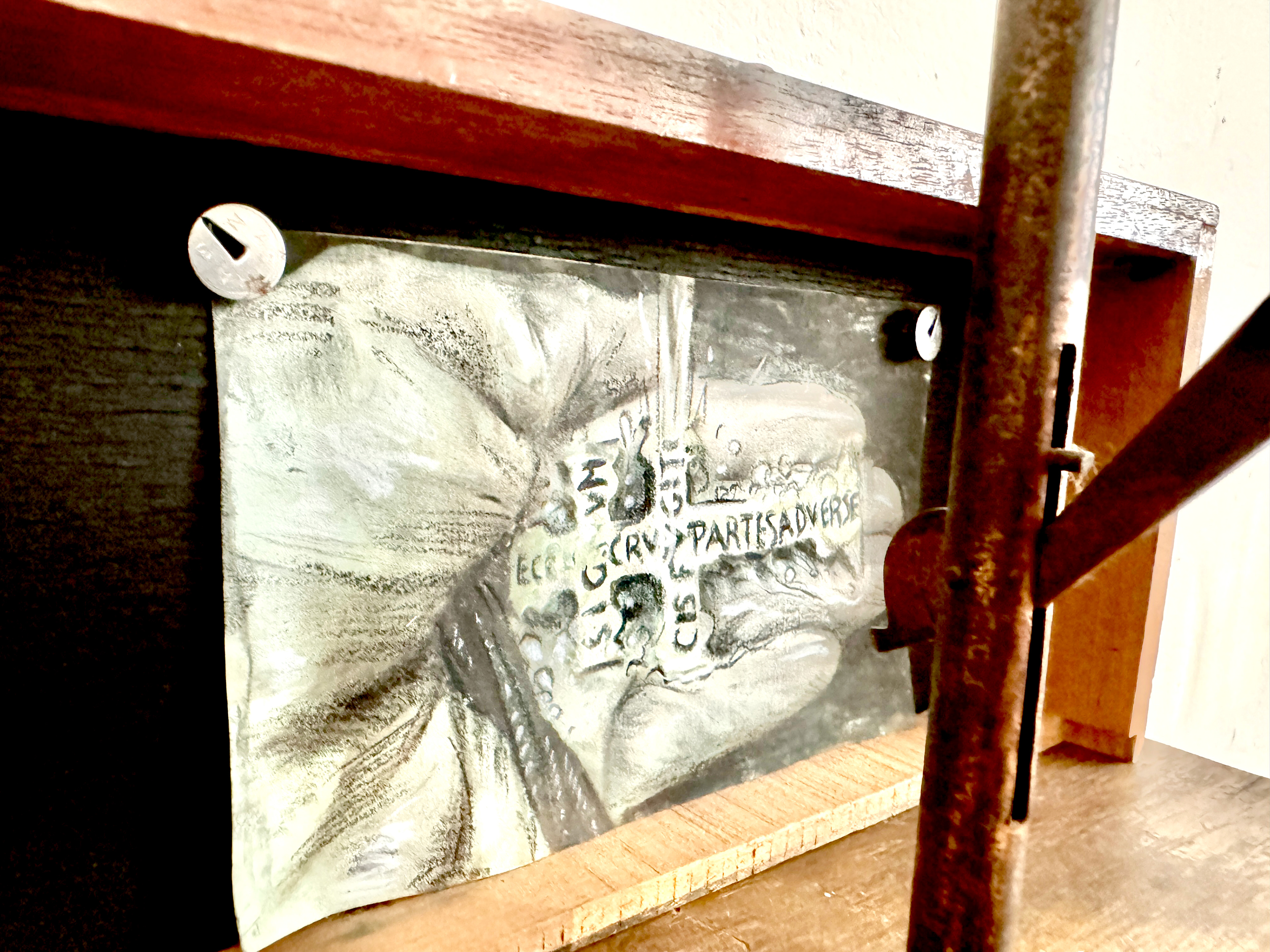
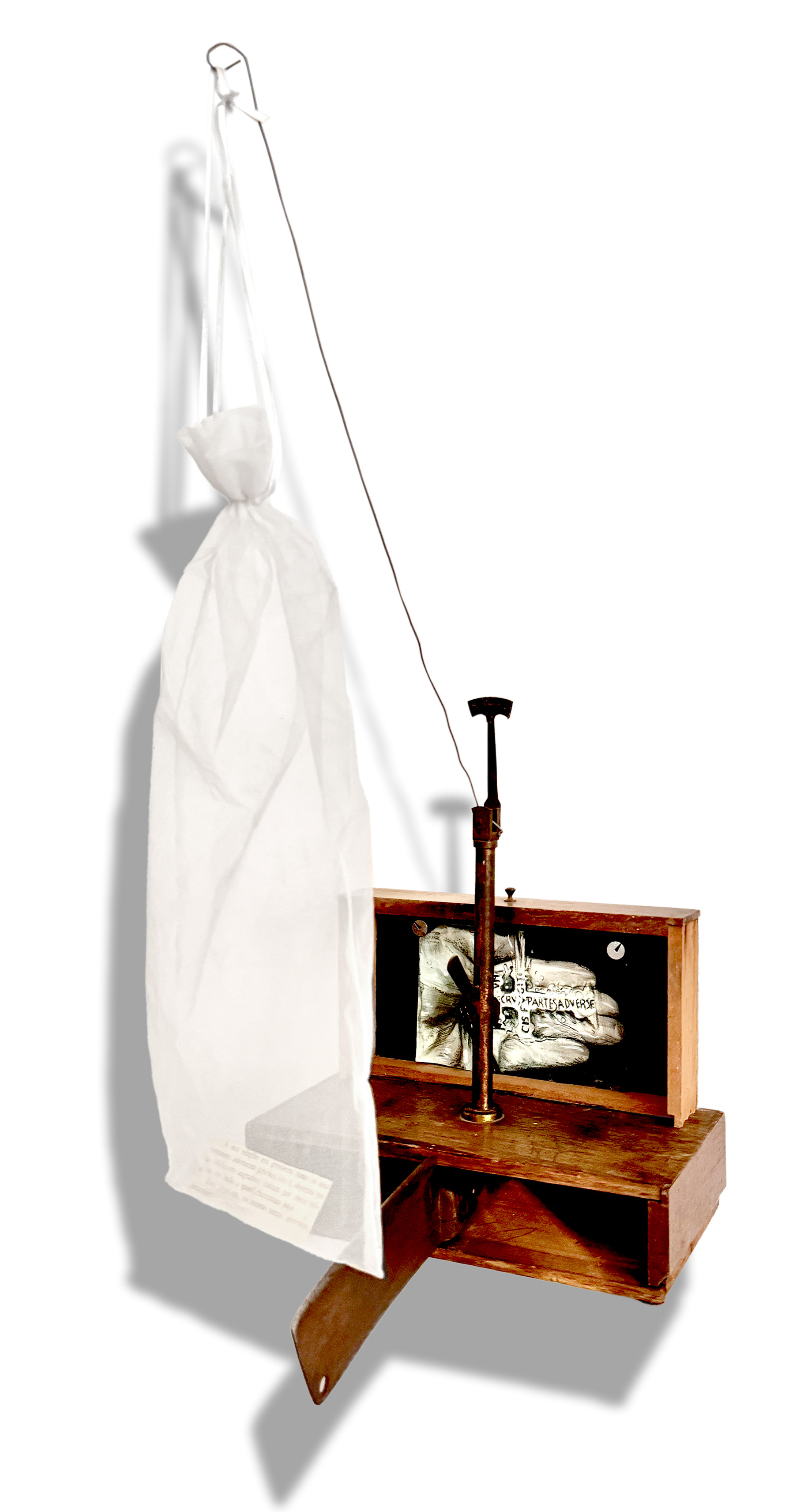
balança antiga, cutelo, desenho, saco em voal e trecho do livro Breves lições de história do Brasil (1922). 60x26x36cm
----------
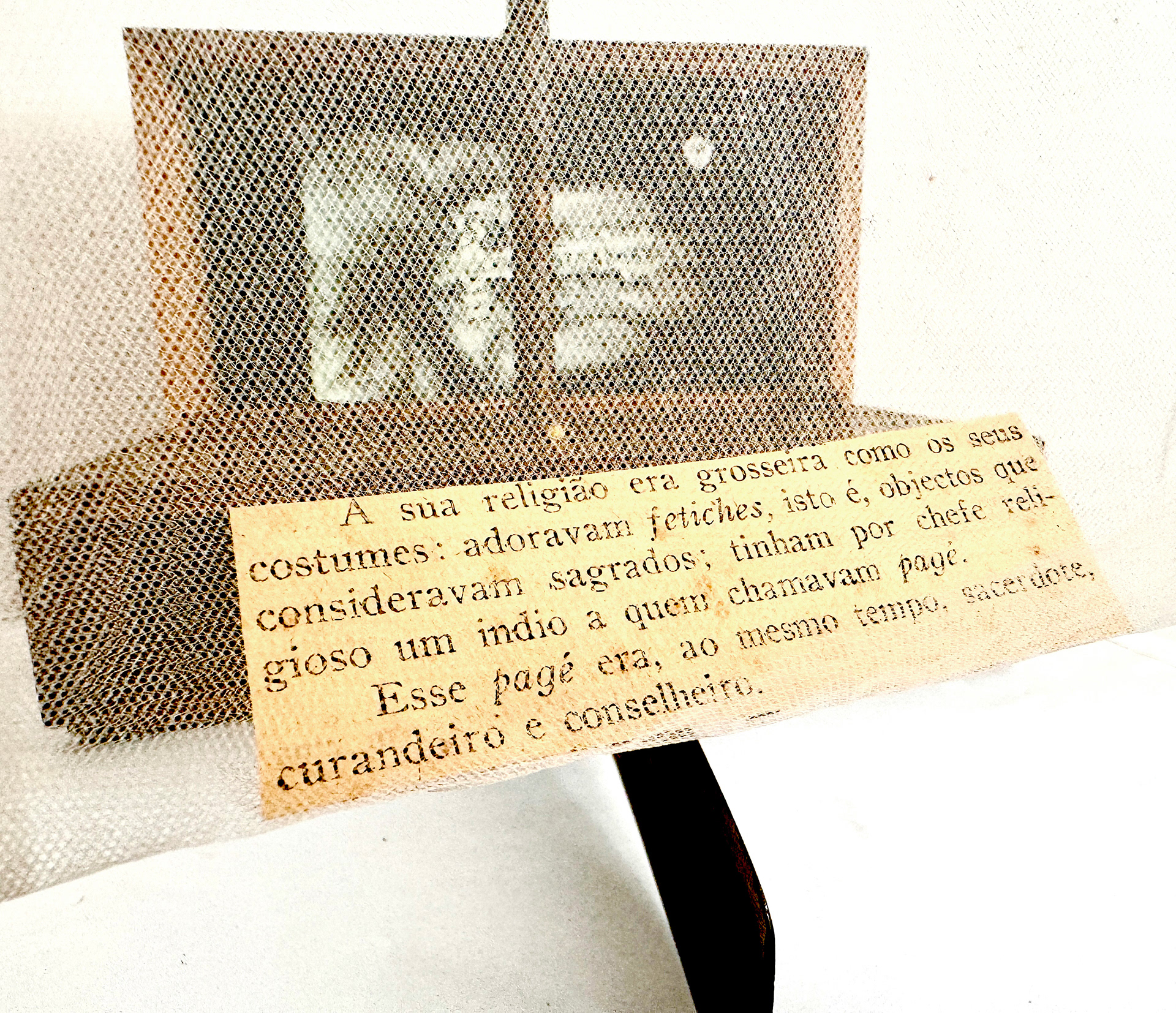
''...A sua religião era grosseira como seus costumes: adoravam fetiches, isto é objectosque consideravam sagrados; tinham por chefe religioso um índio a quem chamavam de pajé. Esse pajé era, ao mesmo tempo sacerdote, curandeiro e conselheiro.''
O trabalho articula uma armadilha visual ambígua para desconstruir as narrativas oficiais da catequização e o peso histórico das missões no território brasileiro. Ao propor um encontro tenso entre objetos que evocam julgamento e ruptura — uma balança antiga e um cutelo —, a representação de um desenho, a fragilidade de um saco em voal e a autoridade institucional de um trecho do livro Breves lições de história do Brasil (1922), o artista opera por meio de uma ironia cortante. A obra funciona, assim, como um dispositivo crítico que mede o verdadeiro custo do projeto colonial sobre os povos originários, expondo a dita "salvação" histórica não como um milagre curativo, mas como um mecanismo de apagamento, violência e captura.
———
MASSS-SSAM / from the series Ex-tory, miraculous remedy / 2024
Antique scale, cleaver, drawing, voile bag and excerpt from the book Brief Lessons in Brazilian History (1922). 60x26x36cm
Antique scale, cleaver, drawing, voile bag and excerpt from the book Brief Lessons in Brazilian History (1922). 60x26x36cm
----------
"...Their religion was as crude as their customs: they worshipped fetishes, that is, objects they considered sacred; they had as their religious leader an Indian whom they called a shaman. This shaman was, at the same time, priest, healer and advisor."
The work articulates an ambiguous visual trap to deconstruct the official narratives of catechization and the historical weight of the missions in Brazilian territory. By proposing a tense encounter between objects that evoke judgment and rupture—an old scale and a cleaver—the representation of a drawing, the fragility of a voile bag, and the institutional authority of an excerpt from the book *Brief Lessons in Brazilian History* (1922), the artist operates through a sharp irony. The work thus functions as a critical device that measures the true cost of the colonial project on the indigenous peoples, exposing the so-called historical "salvation" not as a healing miracle, but as a mechanism of erasure, violence, and capture.